
Autism FAQ
SEED Early Childhood Educational Blog
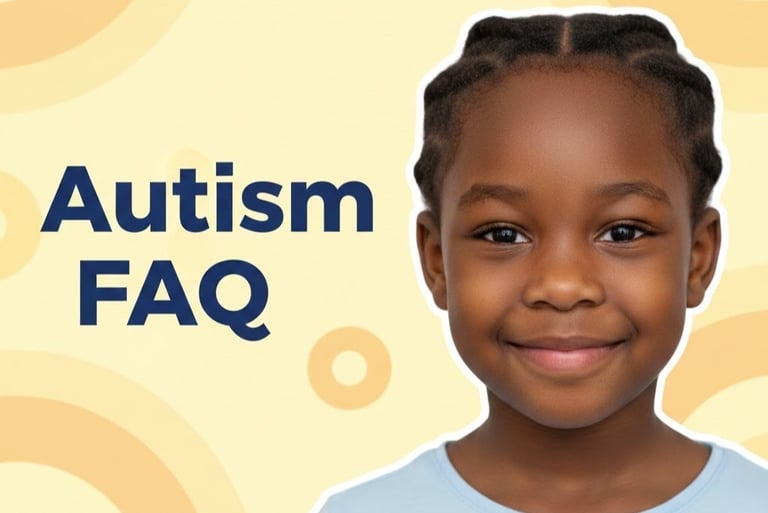
Image credit: AI Thumbnail Austim FAQ of a girl smiling
Comprehensive Autism FAQ covering causes, signs, diagnosis, and support for autism spectrum disorder.
Keywords: Autism FAQ Autistic Spectrum Disorder Children
Author SEED Early Childhood
Reviewed by
4 February 2026
What is autism?
Autism spectrum disorder (ASD) is a group of complex neurodevelopmental disorders that affects how a child communicates, interacts and experiences the world. Autism is not an illness or a disease; it is a different wiring of the brain. These differences influence an autistic child’s learning, behaviour, and social skills and last throughout a child’s life. [8][9][12]
Can autism be treated?
A child with autism will grow and develop with the right interventions, education, support, and therapies. Autism is treatable. Studies reveal that every child with autism can make significant improvement with the appropriate intervention. Each child with autism is unique, and understanding individual circumstances, along with research and clinical knowledge, can help professionals make the right choices. Through interventions, children with autism can become more responsive and learn to make sense of the world around them. [1][5]
What causes autism?
Despite extensive research, there is no single known cause of autism. The current scientific consensus is that autism develops from a combination of factors: genetic and environmental. Genetic and environmental influences are believed to affect early brain development. Other factors that may play a role alongside genetics and environmental factors are the advanced age of parents and complications during pregnancy or delivery. [8][11][5]
What are some of the common signs of autism in children?
Autism is described as a spectrum. The degree of severity can vary from child to child, but in most cases includes notable language delay. Other symptoms may be:
Lack of co-operative play with peers
Difficulties developing friendships
Difficulties understanding feelings
Unusual speech patterns
Avoiding eye contact
Sensory inconsistency
Resistance toward touch
Non-responsive to being called
Distress from noise
Under or over-responsive to pain or extremes of temperature
Distress from smells, textures or tastes
Repetitive behaviours
Rocking or flicking
Struggles with change and requires fixed routines
Obsessive behaviours
Logical and literal thinking [1][4][5]
When considering the symptoms of autism, it is important to understand what is age-appropriate for the child’s stage of development. For some children, behaviours are usual and common for their age and stage, such as very young children playing alone, but as they get older, this usually changes, and they engage with peers.
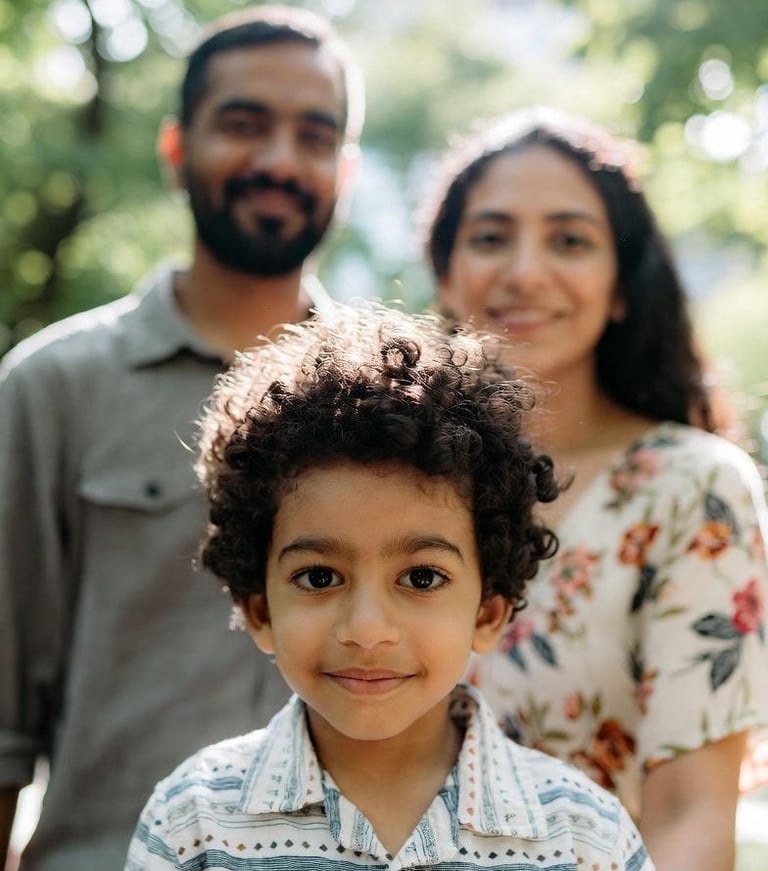
Image credit AI. A child with autism stood with his father and mother
Does autism run in families?
Research has shown that genetics are linked to many neurodevelopmental conditions, including autism spectrum disorder. Previous autism research identified hundreds of autism genes. Autism can sometimes affect people in the same family, and research with identical twins has shown a strong genetic connection. [9][1][6]
Adult Autism Diagnosis: How do I find out if I’m autistic?
If you identify with any of the common signs of autism listed above, you could consider speaking to your GP. [1]
Can you develop autism as an adult?
Autism cannot be developed in adulthood. If you have suddenly developed new behaviours linked to autism, it is likely to be another condition. [1] It is recommended that you speak to your GP.
How do I find out if my child is autistic?
Sense, leading disability charity advises that if you think your child might be autistic, you should speak to your GP and or a health visitor for children under 5 years old. [4]
Do boys and girls have autism?
Yes, both boys and girls can have autism. Research suggests that four times as many boys are diagnosed with autism as girls, but the number of autistic girls is likely to be much higher. Commonly, the signs of autism manifest in different ways when it comes to girls and boys. Thus, autism in boys is more frequently identified, whereas girls can use masking behaviours to imitate social skills and therefore identification of autism becomes more complex, which may lead to girls may have a more notable manifestation when they are older. [1][4][6]
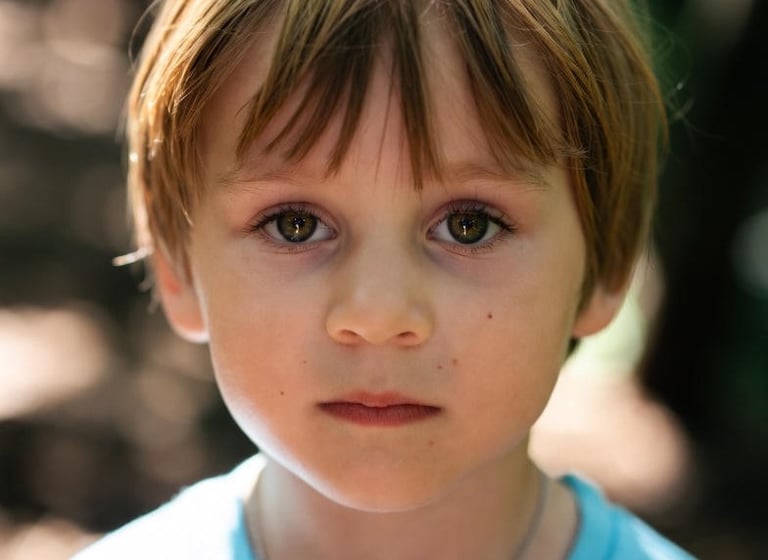
Image credit AI. A boy diagnosed with Asperger's with a serious expression
Why is Asperger's syndrome now counted as Autism?
The term ‘Asperger syndrome’ was coined in the 1980s to describe children with autism who were verbal and did not have learning disabilities. The term Asperger’s is no longer used in diagnosis. Children who would have previously been diagnosed with Asperger's syndrome are now diagnosed with autistic spectrum disorder. However, individuals diagnosed with Asperger’s may continue to refer to themselves in that way. [4][6]
Are more children being diagnosed with ASD?
While data variables must be considered, surveys over the last 20 years have shown an increasing prevalence of autism. Today, autism is one of the four major developmental disorders. [9][5]
Can autism be cured, or can autism go away?
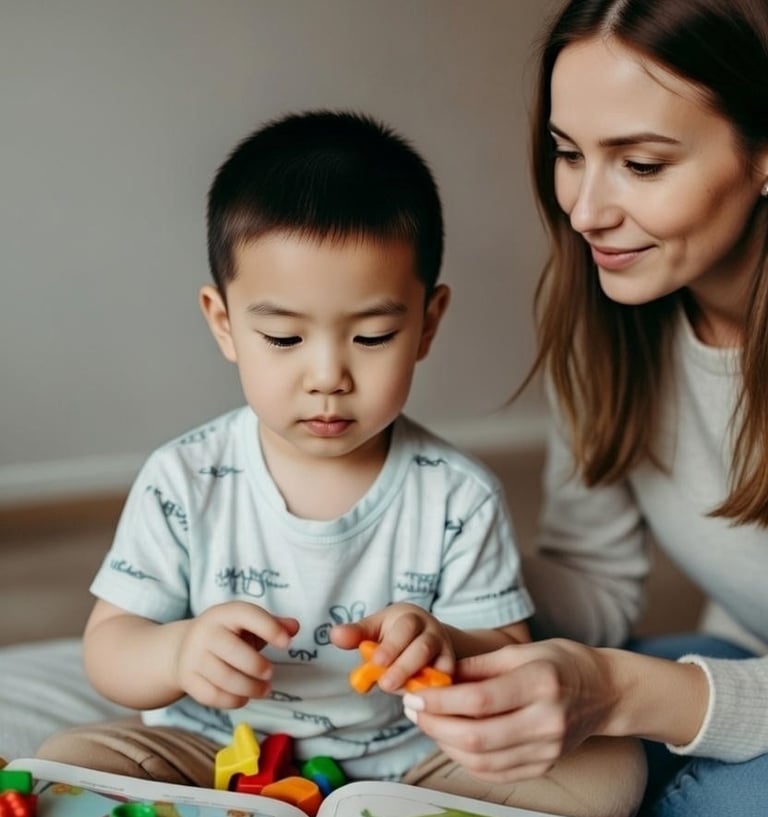
Autism can be treated. Autism is a condition that a child is born with; for the very young, early intervention is crucial. Research has shown that all children with autism can improve significantly with appropriate intervention. Interventions can range from:
Educational
Immunological
Metabolic
Sensory
Types of therapies
Applied Behaviour Analysis (ABA): A therapy that uses reinforcement techniques to teach new skills and reduce harmful behaviours.
Speech and Language: Helping to improve both verbal and non-verbal communication skills.
Occupational Therapy (OT): Supports sensory integration and the development of daily life skills.
Social Skills: Supports interaction and builds relationships with peers. [7][5][8]
What is masking?
Masking is a very common trait in autistic children, especially girls. Masking is where an autistic child will consciously or unconsciously try to hide certain behaviours.[1]
Image Credit: AI. A boy with autism having a professional intervention


Image Credit: AI. A boy with autism with furrowed eyebrows
Why are autistic children naughty?
All children display different behaviours, some can be challenging; however, these may be appropriate for their age and stage of development.
In autistic spectrum disorder, there are many types of behaviours that range from mild to severe. Behaviour should be viewed as a form of communication. Some children with autism communicate differently because their understanding and processing of information can vary significantly from neurotypical norms.
Some unusual behaviour may actually be reactions to pain the child can not verbally convey. For example, toothache, headache, heartburn or tummy ache, these may manifest as aggression or self-injury. There may also be extremes of hyperactivity and passivity in social interactions and social settings. These behaviours can better be categorised as ‘behaviours that challenge’ as it focuses on the possible underlying message being communicated. [5][7]
What other condition affects autistic children?
Autism can occur by itself or in association with other developmental disorders, such as:
Epilepsy
Attention Deficit Hyperactivity Disorder (ADHD)
Dyslexia
Anxiety
Depression [4][3]
References:
1. Beyond Autism (2025) Autism FAQs Link here
2. CDC (2024) Frequently Asked Questions about Autism Spectrum Disorder Link here
3. NHS (2022) What is autism? Link here
4. Sense (2022) Autism Link here
5. Autism UK Independent (2025) 20 FAQ Link here
6. Devon County Council (2017) Frequently asked questions about autism Link here
7. Thinking Autism (2023) Autism Facts FAQs Myths & Truths Link here
8. Nallapu, S. (2026) Your Autism FAQs Answered: Signs, Support, and Next Steps Link here
9. Wang, C., & Wang, H. (2024). Full article: The growing challenge of autism spectrum disorder: a comprehensive review of etiology, diagnosis, and therapy in children Link here
10. Alrehaili, R. A., ElKady, R. M., Alrehaili, J. A., & Alreefi, R. M. (2023) Exploring Early Childhood Autism Spectrum Disorders: A Comprehensive Review of Diagnostic Approaches in Young Children Link here
11. Wan, L., Wu, Y., Tang, Y. et al. (2026) Pressure and coping strategies of caregivers of children with autism spectrum disorder in rural areas: a qualitative study Link here
12. Qin, L., Wang, H., Ning, W. et al. (2024) New advances in the diagnosis and treatment of autism spectrum disorders Link here
Author: SEED Early Childhood
SEED Early Childhood is the Educational blog founded by Samantha Donnelly to bring professionals to you.
Share this post
SEED Early Childhood Educational Blog
© 2026 SEED Early Childhood. All rights reserved. SEED Early Childhood is an Education Blog. Your use of this site is governed by our Terms and Conditions and Privacy Policy. Our website, blog services, content, and products are for informational purposes only. SEED Early Childhood does not provide medical advice, diagnosis, or treatment. See additional information.
Stay updated, subscribe to the newsletter.
SEED Early Childhood Guest Contributors
Educational Topics
Social Channels
Follow SEED Early Childhood on Social Media