
Shyness
SEED Early Childhood Educational Blog
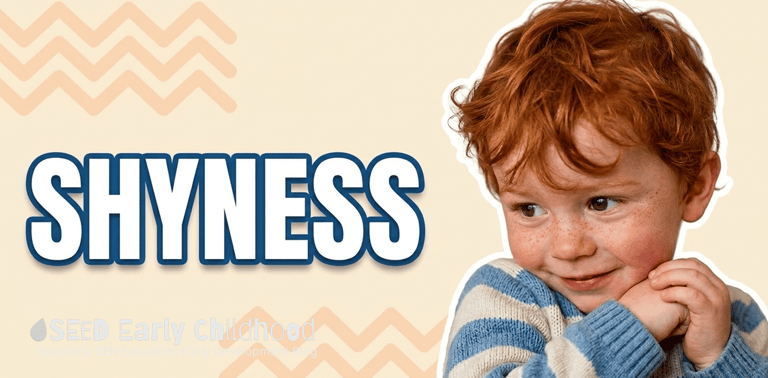

Shyness: What exactly is it and how can it be overcome?
Keywords: Shy timid shyniess they’re just shy shy child clingy
Author Samantha Donnelly
23 March 2026


Shyness is common among young children, marked by feelings of self-consciousness, nervousness, and discomfort in social situations and new experiences. approximately 1 in 5 children seems to have a biological predisposition towards shyness.
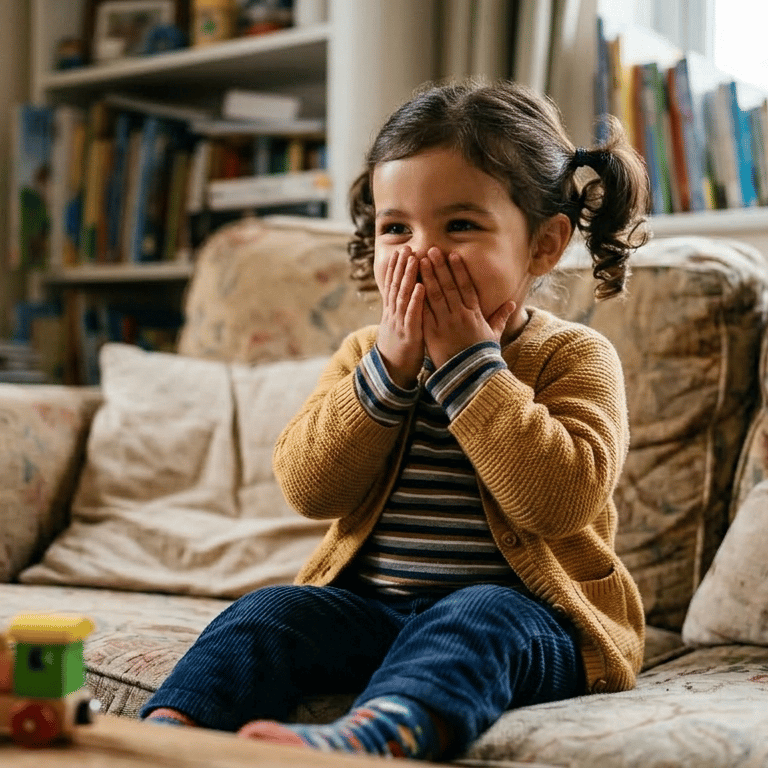
Image credit: AI. A shy toddler sits on a sofa
Roughly 1 in 5 children present a biological predisposition towards shyness. Shyness is normal in young children, but it should not be ignored. It is more than a feeling of nervousness or self-consciousness; it is a complex emotional response that is manifested in various ways. With support, many children grow out of shyness as they get older. [2][3][10][8]
Defining Shyness
Many research studies classify shyness as a stable trait related to anxious-solitude and anxious-withdrawal. Children manifesting shyness may:
Avoid eye contact
Speak softly
Withdraw from social situations
Be clingy
Avoid new activities
Show a limited desire for interactions
Shyness can affect a child’s relationships, as it may hinder their communication and their ability to initiate engagement. Shy children can enjoy socialising on their own terms, which can also limit their learning, especially their social-emotional and communication development. Shy children may also worry about being accepted and fear making mistakes; this may cause them to process information for longer periods and limit their contributions, even though they feel able to participate. [1][9][10]
Labelling a Child as Shy
A young child being shy is normal; this is why labelling shyness can have a negative impact on children. A child may be shy, but they may not benefit from being labelled ‘shy’. Adults may find themselves explaining a child’s behaviour to another adult in front of the child; this can reinforce the child’s shyness, as the child hears the description. This can also become a way to excuse them from interaction, negatively impacting their access to socialisation. This can also encourage the child to default to ‘shy behaviour’ even when they do not ‘feel’ shy; this can cause them to view shyness as a permanent state rather than a temporary one. [3]
Contributing Factors to Shyness
The field of psychology links shyness to social, environmental and biological factors, suggesting that a child’s early experiences, family dynamics and parenting styles can contribute to shyness.
It is normal for young children to feel uncomfortable around new people and in new settings. Babies can display shyness as early as 8 months old. A significant change, such as a sick parent or a change in school, can also trigger shyness. Situations like these are temporary and usually go away as the child grows in confidence.
As a child develops, they can adopt various coping methods based on their experiences. These coping strategies can have positive and negative outcomes. A study examining developmental patterns found that children’s coping mechanisms, such as suppressing sadness and not speaking out when treated unfairly, negatively impacted children’s self-regulation but also prevented conflict and promoted reconciliation.
Parents play a crucial role in shaping the child’s character and personality, which can contribute to the child becoming shy. Parents who provide space for their child to express themselves support the child’s social-emotional development and confidence. [2][3][7][10]
Anxiety and Shyness
When shyness is ongoing, it can become anxiety. Anxiety can cause a child to be fearful and stressed. Anxiety can also lead to physical symptoms like stomach aches and headaches. It seems that this kind of shyness-induced anxiety comes as the child gets older. These behaviours can affect the child’s social interactions and well-being. Ongoing shyness can negatively impact a child’s ability to learn. Research into classroom shyness found it to be an academic and social risk factor. If shyness continues into adulthood, it can become social anxiety disorder or avoidant personality disorder. [2][3][8][10]
Quiet, shy, and anxious (QSA) children may be:
Socially withdrawn and in their own imagination
Socially awkward
Anxious in their behaviour
The QSA child’s actions and behaviours can cause social exclusion by peers. The effects of shyness can be a cycle, as the child may prefer being alone. Because their behaviour is not socially appealing, the child ends up spending increasingly more time alone.[1][9][10]
Because shyness can negatively affect children’s early development, ability to learn, and social life, identifying children who exhibit shy tendencies could reduce the risks of later problems. Shy children need support to build relationships. Through social engagement, shy children can build their vocabulary, language, and listening skills and gain a foundation for social interaction. [4][5]
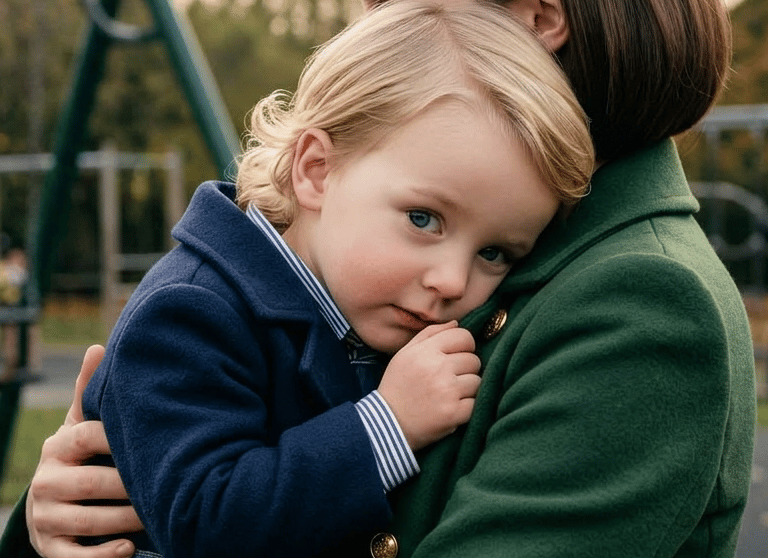
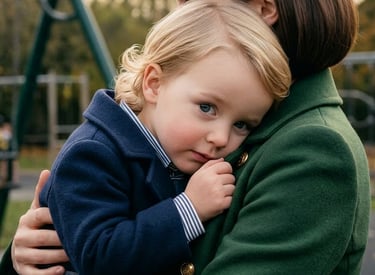
Image credit: AI. A shy boy is carried by his mum
How to Support a Shy Child
One study measuring children aged 18 months, 3 and 5 years old found that shyness was predictive of anxiety and depression in later years. Therefore, supporting a shy child is so important. Strategies for supporting a shy child:
Keep social groups small
Organise for a younger playmate
Communicate about social situations
Allow the child to express themselves
Boost their confidence
Praise achievement
Shy children can be easily overwhelmed emotionally. Sometimes a combination of factors, such as a new activity, a new location, and new people, can be too much. Preparation for new situations can help a shy child try new things. Building security and trust can allow the child to express themselves and feel safe. In some cases, a child will need the support of a professional. The parent can begin this process by contacting their GP. [3][4][5][10]
Summary
Young children display shyness from time to time, and this is completely normal. However, research shows shyness can be predictive of future mental illness and learning difficulties. A shy child must be identified and supported. Support can enable a shy child to build their confidence and find their voice. This confidence will enable them to thrive socially and flourish in their learning.
Author: Samantha Donnelly BA(Hons)MA
Samantha Donnelly is an Early Childhood Practitioner with more than 15 years of experience working with children, specialising in Early Childhood Education. Samantha is the founder of SEED Early Childhood Educational Blog.
SEED Early Childhood is an independent educational blog created with this mission: to provide free, professional insights into child development and education for parents.


References
1 Davis, S., Packer, R., & Pierce, A. (2024). Evaluating the effectiveness of supporting young quiet, shy and/or anxious primary school children in Wales, using two targeted intervention programmes. Education 3-13, 52(8), 1033–1049. https://doi.org/10.1080/03004279.2022.2131455
2 BBC Children In Need (2022) https://www.bbcchildreninneed.co.uk/wp-content/uploads/2024/05/BLOG-POST_5.pdf
3 Pampers (2025) Shy children: overcoming shyness https://www.pampers.co.uk/toddler/development/article/shy-children-overcoming-shyness
4 Baardstu, S., Sette, S., Brandlistuen, R. E., & Wang, M. V. (2023). The role of early social play behaviours and language skills for shy children’s later internalizing difficulties in school. Frontiers in Psychiatry, 14, 1120109. https://doi.org/10.3389/fpsyt.2023.1120109
5 Cowley, S. Social skills – How to help shy children develop them Yearshttps://www.teachearlyyears.com/positive-relationships/view/best-behaviour-social-skills
6 Patwardhan, Irina & Archbell, Kristen & Rudasill, Kathleen & Coplan, Robert. (2015). Shy Children in the Classroom: From Research to Educational Practice. Translational Issues in Psychological Science. 1. 149-157. 10.1037/tps0000024.
7 Hassan, R., Smith, C. L., Schmidt, L. A., Brook, C. A., & Bell, M. A. (2023). Developmental patterns of children’s shyness: Relations with physiological, emotional, and regulatory responses to being treated unfairly. Child Development, 94(6), 1745. https://doi.org/10.1111/cdev.13961
8 Bekkhus, M., McVarnock, A., Coplan, R. J., Ulset, V., & Kraft, B. (2023). Developmental changes in the structure of shyness and internalizing symptoms from early to middle childhood: A network analysis. Child Development, 94(4), 1078-1086. https://doi.org/10.1111/cdev.13906
9 Bowker, J. C., Santo, J. B., & Adams, R. E. (2019). A Dynamic Examination of the Associations between Shyness, Psychological Difficulties, and Stressful Life Events during Early Adolescence. Journal of abnormal child psychology, 47(7), 1183–1195. https://doi.org/10.1007/s10802-019-00520-x
10 Foster, H, Understanding the Causes of Shyness in Psychology https://listen-hard.com/social-and-cultural-psychology/causes-shyness-psychology/ - What_Is_Shyness
Share this post
Support SEED Early Childhood
Keep reading
Learn more about Autism, Early Development and Early Education
SEED Early Childhood Educational Blog
© 2026 SEED Early Childhood. All rights reserved. SEED Early Childhood is an Education Blog. Your use of this site is governed by our Terms and Conditions and Privacy Policy. Our website, blog services, content, and products are for informational purposes only. SEED Early Childhood does not provide medical advice, diagnosis, or treatment. See additional information.
Stay updated, subscribe to the newsletter.
SEED Early Childhood Guest Contributors
Educational Topics
Social Channels
Follow SEED Early Childhood on Social Media