
Selective Mutism
SEED Early Childhood Educational Blog
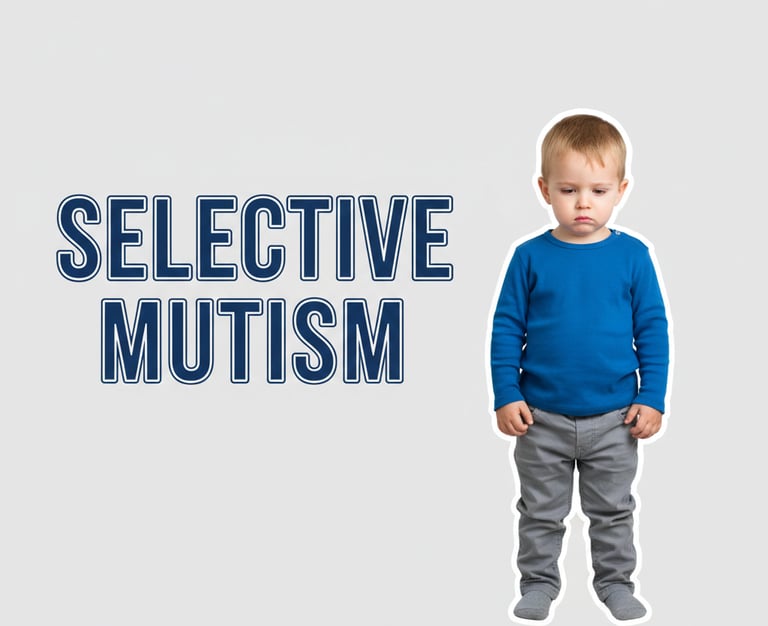
A detailed look at selective mutism in early childhood: Causes, treatments and strategies.
Keywords: Selective mutism Anxiety Childhood Not talking Shy Children
Author SEED Early Childhood
Reviewed by
9 February 2026


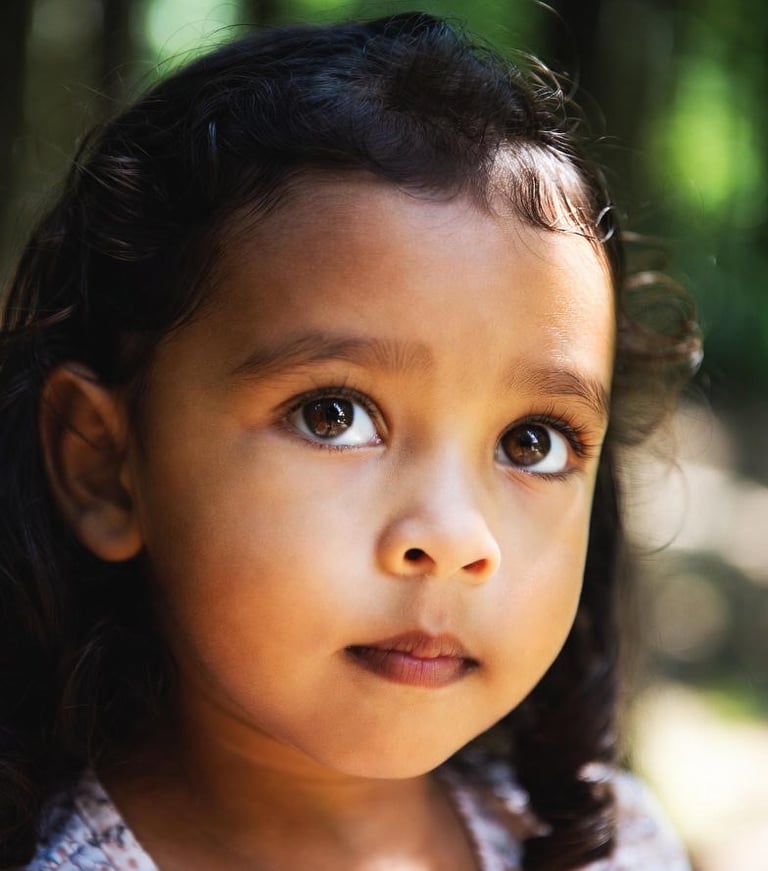
Image credit: AI. Image of a girl looking upwards.
Selective mutism, sometimes also known as "situational mutism", is a rare anxiety disorder affecting less than 1% of children. This usually begins in early childhood and often becomes noticeable when a child attends pre-school, reception or experiences situations which suddenly place them in unfamiliar social settings for the first time. Because symptoms are most recognised when children enter school, selective mutism often goes unnoticed in children younger than 5 years old. Addressing selective mutism in young children requires adaptation when forming interventions. [1][4][5][9]
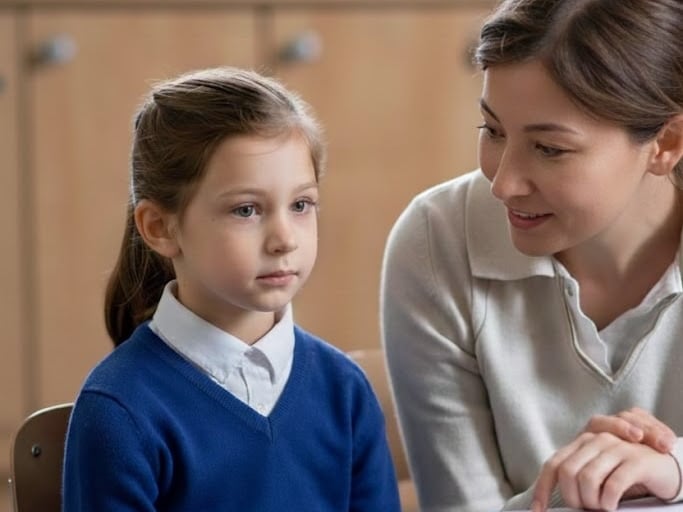

Image credit: AI. A girl with selective mutism at school with a teacher.
What is Selective Mutism?
Selective mutism is an anxiety disorder and is categorised as a mental health condition. A child with selective mutism finds they cannot talk in certain situations because of anxiety. This condition is more than being shy or timid. Research [10] shows that children can develop selective mutism before the age of three. While selective mutism can affect young children, it can also affect teenagers and adults.
Figures show that selective mutism affects females twice as often as males. These numbers could reflect stereotypes about male and female talkativeness, and so further research is required. Findings have revealed that selective mutism is more common in girls who have recently migrated from their birth country.
Children with selective mutism are able to speak freely to certain people, such as close family and friends, when nobody else is around to trigger the freeze response. According to the Child Mind Institute, a child with selective mutism might go a whole year in a classroom without speaking once to their teachers or peers. [1][8][3][4]

What are the signs of selective mutism?
Selective mutism can often start in early childhood, between the ages of 2 and 4 years old, usually in connection with starting nursery or school. Children with selective mutism tend to be chatty at home but are unable to speak in public environments like their school or a restaurant. Sometimes the expectation to speak to particular people triggers feelings of anxiety and panic, making it impossible for the child to talk.
The symptoms of selective mutism can take different forms, such as:
A tense or stiff posture.
Freezing or feeling unable to move.
A blank or frightened expression.
Avoiding eye contact.
Not voicing needs.
Not voicing wants.
Behaving disruptively to avoid talking.
Completely unable to talk.
Communicating less or in limited ways. [1][3][4]
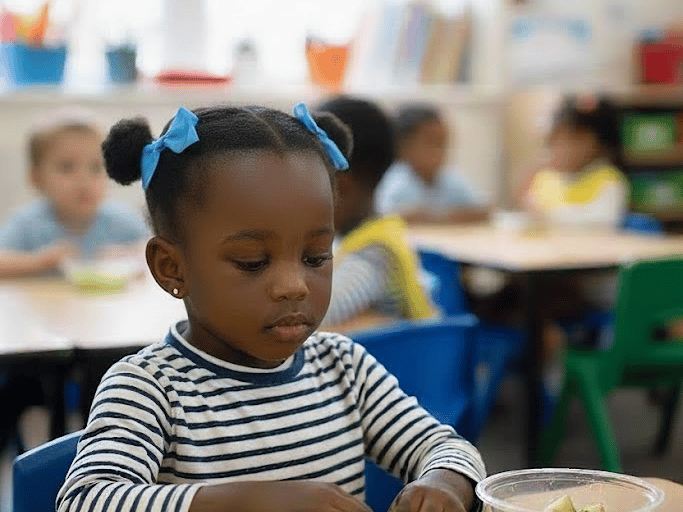
Image credit AI. A girl with selective mutism in preschool.
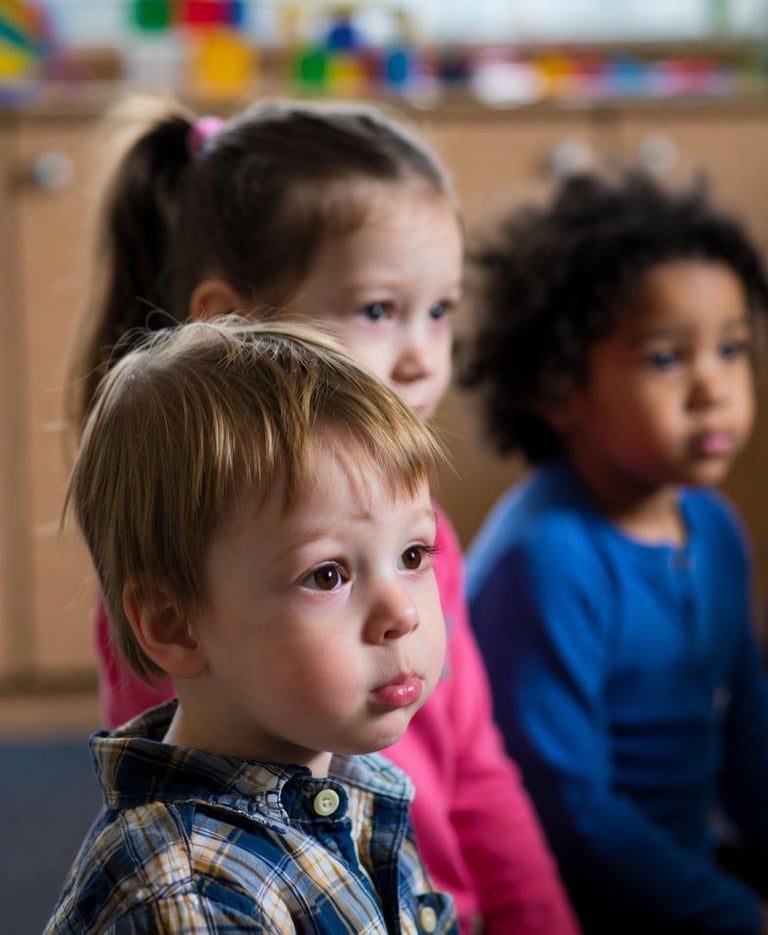
Image credit AI. Boy with selective mutism sits for carpet time at nursery.
What are the causes of Selective Mutism?
Experts cannot yet completely explain why selective mutism happens, although they suggest some possible factors which may cause or contribute to selective mutism, these include:
Phobias.
Autism spectrum disorder.
Separation anxiety.
Post-traumatic stress disorder (PTSD).
Social anxiety disorder.
Other anxiety disorders.
Some children develop selective mutism because of anxiety about how they speak or understand others. Other children may have problems processing sensory information, such as loud noises. Another factor can be problems with the child’s speech and language, or hearing, which can make speaking more stressful.
Social anxiety disorder is extremely common in children with selective mutism. Experts estimate 75-100% of those with selective mutism also have social anxiety disorder.
Research shows that anxiety disorders can run in families; children with selective mutism are more likely to have a parent or sibling with selective mutism or some form of anxiety disorder. 2023 research [10] showed that 64% of participants had a family history of psychiatric disorder. [4]
Social circumstances
Children with certain social factors or circumstances are more likely to develop selective mutism. These include:
Bullying.
A traumatic event
Abuse.
Family problems.
Immigrating and a change of language. [1]
How to support a child with selective mutism?
Selective mutism does not go away by itself; children will need support. When supporting a child with selective mutism, do not rescue them by answering for them to relieve their anxious feelings, as this can present the belief that talking is a negative experience. The use of punishment as a motivator also carries negativity.
Help the child to feel comfortable.
Allow the child enough time to respond.
Motivate using specific labelled praise: “Well done, for telling me you want milk”
Rephrase your questions.
Practice echoing: Repeat or paraphrase what the child is saying.
Use narration to verbalise what is happening.
It’s important to remember that selective mutism is a mental health condition. The child does not have control over what is happening. The adult needs to be controlled in their reaction.
Adults play an important role in reducing anxiety and supporting a child’s communication. Parents can specifically support early language development. Parents who model language can introduce communication as something natural. [2][4][3][1][9]


Image credit: AI. Girl with selective mutism in a social situation.
What are the common myths about selective mutism?
Children with selective mutism choose when to speak.
Selective mutism is a form of autism.
Children with selective mutism have been traumatised.
Children with selective mutism are just shy.
Children with selective mutism are more likely to have other speech and language problems
Only older children can have selective mutism [1][3]
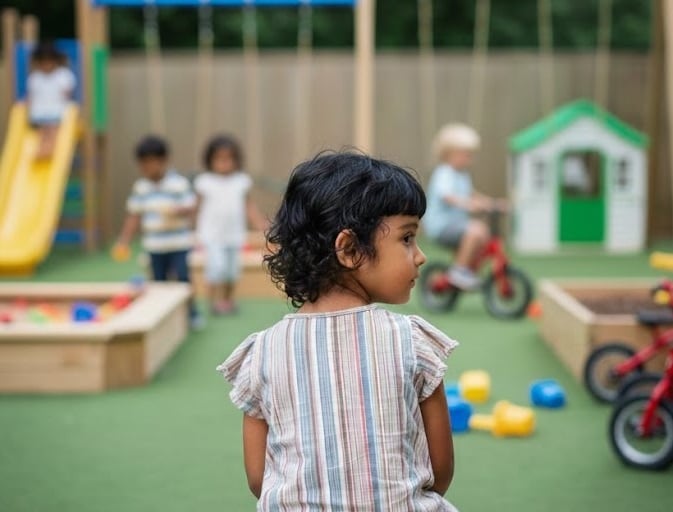
Image credit: AI. Girl with selective mutism sits alone in a preschool garden.
What happens if selective mutism is untreated?
Left untreated, selective mutism can lead to isolation, low self-esteem and social anxiety disorder and can continue into adulthood. People tend to speak on behalf of the child with selective mutism instead of letting them respond; this can make their condition harder to treat.
Untreated selective mutism can negatively affect a child’s life in many ways:
Social difficulties.
Loneliness.
Isolation.
Negative impact on education.
Other anxiety conditions.
If untreated, childhood selective mutism symptoms seem to disappear by adulthood, but they become symptoms of other anxiety disorders. [4][3][1][2]
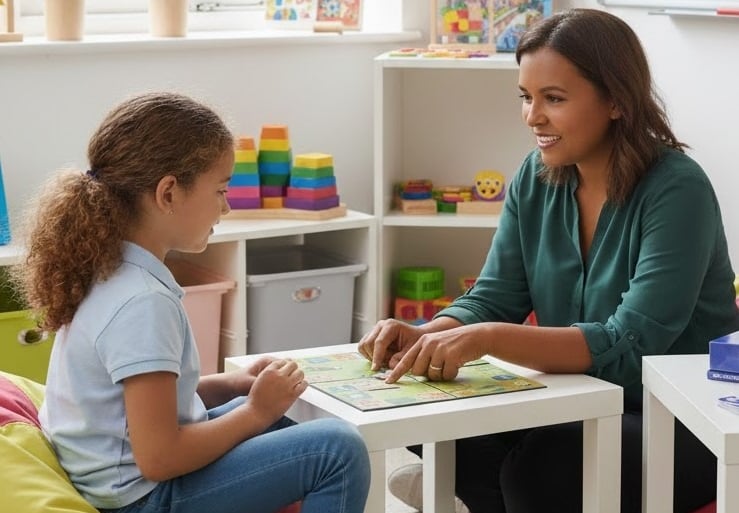
Image credit: Child with selective mutism has a behavioural therapy.
What are the treatments and strategies for selective mutism?
Every child is unique; their process of overcoming selective mutism will differ. Usually, a child can successfully overcome selective mutism if they are diagnosed at an early age. A mental health provider, like a psychiatrist or psychologist, will usually diagnose selective mutism. Since symptoms are heightened in educational settings, early identification will be done in part by educators. This means educators need awareness and understanding of selective mutism. Other providers, like speech and language specialists, can rule out other conditions and support the route to diagnosis. Usually, behavioural treatments are used for treating selective mutism, and sometimes the addition of medication is used.
Treatments and strategies are:
Mental health therapy
Graded exposure Speech therapy
Medications
Stimulus fading
Shaping
Positive and negative reinforcement
Desensitisation [6][9][4][5][10][1][3][1]


Image credit: AI. A boy with selective mutism uses hand gestures and facial expressions.
How can my child be supported in the classroom?
Partnership with the healthcare providers and educators is very important for young children. The educational setting will need to support the treatment program. Which means educators need to understand selective mutism. Many educators have not heard of selective mutism and may misinterpret the child’s behaviour as challenging behaviour or a lack of understanding.
Educators may support a child by:
Gaining an understanding of selective mutism
Making routines clear
Social stories
A visual timetable
Cue cards
Preventing adults and other children from answering on the child’s behalf [5] [9][3]
Summary
Selective mutism is a condition that can start in early childhood and makes a child unable to talk in certain situations because of anxiety. Children with selective mutism are not shy, but have a disorder that affects their behaviour. Supporting a child with selective mutism requires awareness, understanding and the use of evidence-based treatments [1]
References
[1] Cleveland Clinic Selective Mutism: Symptoms & Treatment https://my.clevelandclinic.org/health/diseases/selective-mutism
[2] Psychology Today Selective Mutism https://www.psychologytoday.com/us/conditions/selective-mutism?msockid=3974a409d14e64171ddcb75ed03e658b
[3] Child Mind Institute Guide to Selective Mutism in Children https://childmind.org/guide/parents-guide-how-to-help-a-child-with-selective-mutism/ - block_68f0004155d7a
[4] NHS Selective mutism https://www.nhs.uk/mental-health/conditions/selective-mutism/
[5] NHS Sheffield Children’s NHS Foundation Trust Supporting a child who has selective mutism https://library.sheffieldchildrens.nhs.uk/supporting-a-child-who-has-selective-mutism/
[6] Khalil, K. Breaking the Silence: Supporting Kids with Selective Mutism https://www.tghclinic.com/post/breaking-the-silence-supporting-kids-with-selective-mutism
[7] Cambridge OCR Supporting students who are selective mutes https://www.ocr.org.uk/blog/supporting-students-who-are-selective-mutes/
[8] Child Mind Institute (2025) Teacher Strategies to Support Children with Selective Mutism in the Classroom http://doi.org/10.31004/aulad.v7i2.734
[9] Renk, K., Daleandro, K., Verdone, M., & Murphy, Q. (2025) Understanding Selective Mutism in Very Young Children https://doi.org/10.3390/bs15070923
[10] Boneff-Peng, K., Lasutschinkow, P.C., Colton, Z.A. et al. (2025) An Updated Characterization of Childhood Selective Mutism: Exploring Clinical Features, Treatment Utilization, and School Services. https://doi.org/10.1007/s10578-023-01589-8


Image credit: AI. Family walking together.
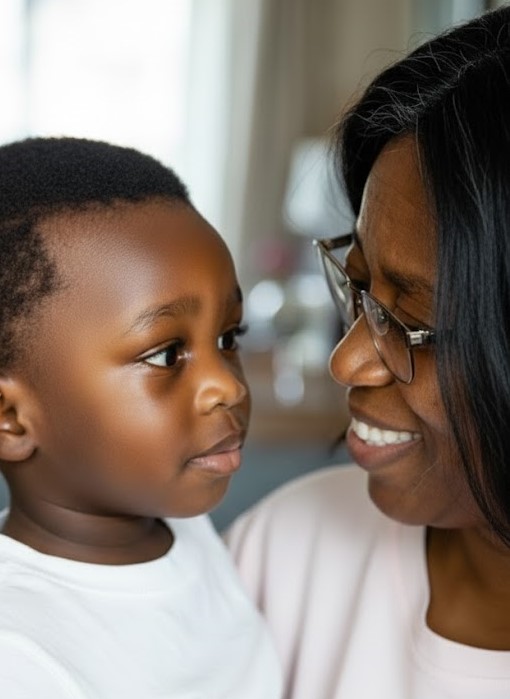
Image credit: AI. Grandmother gives praise to grandson with selective mutism.
Author: SEED Early Childhood
Reviewed by:
SEED Early Childhood is the Educational blog founded by Samantha Donnelly to bring professionals to you.
Share this post
SEED Early Childhood Educational Blog
© 2026 SEED Early Childhood. All rights reserved. SEED Early Childhood is an Education Blog. Your use of this site is governed by our Terms and Conditions and Privacy Policy. Our website, blog services, content, and products are for informational purposes only. SEED Early Childhood does not provide medical advice, diagnosis, or treatment. See additional information.
Stay updated, subscribe to the newsletter.
SEED Early Childhood Guest Contributors
Educational Topics
Social Channels
Follow SEED Early Childhood on Social Media