
Early Childhood Development
SEED Early Childhood Educational Blog
A brief look at child development and the factors that can impact it.
8 May 2026
UPDATE: 12 June 2026

By Samantha Donnelly BA (Hons) MA
By Wendy Forbes NNEB (Old Collegians)
Early childhood is the time from conception to approximately 5 years old. Early childhood, sometimes known as the early years, is believed to be the most essential developmental stage of life. During the early years, critical advances are made in the physical, socio-emotional, and cognitive aspects of development. [1]
What is Development?
Development describes the processes that a child’s body and brain go through. These processes are believed to become more complex as a child transitions into adulthood (puberty). [1][2]
Image credit: AI. A newborn baby cradled by their father.
Babies
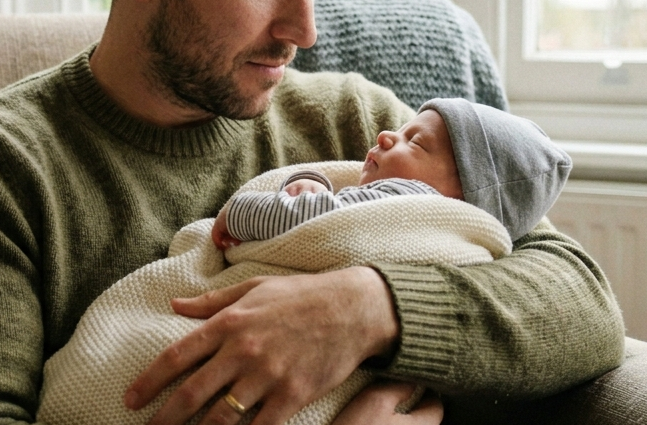
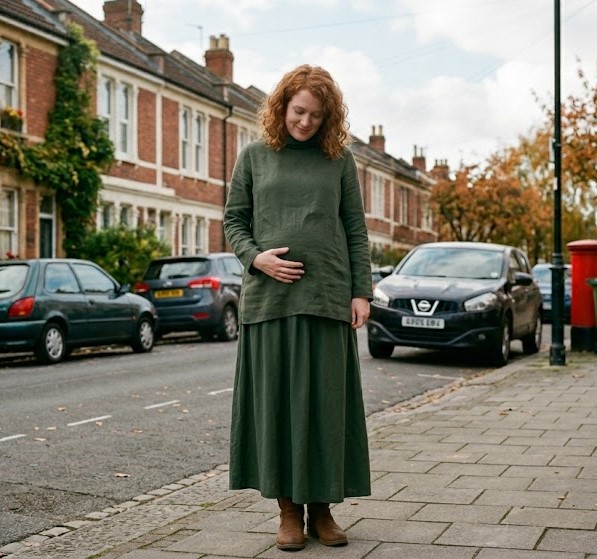
Image credit: AI. Pregnant woman stood illustrating pre-birth.
A baby’s brain develops dependent on the external stimulation of neurological connections gained through experiences. Life experiences, including pre-birth experiences, can have long-term impacts on health and the child’s ability to learn. The brain of a baby is not a fixed structure and does not simply develop based on genetics. Children are usually born ready to engage and explore the world. Babies are active investigators and observers. It is believed that babies actively stretch their own capabilities as they interact with the world around them. Research suggests that during early childhood, babies and young children are naturally driven towards greater learning as they meet challenges, practice, and gain independence. [2]
The First Three Years
During the early years, children’s learning can be rapid as they try to make sense of the world around them. Research suggests 80% of their brain growth and development takes place in their first three years. [2][4][5]
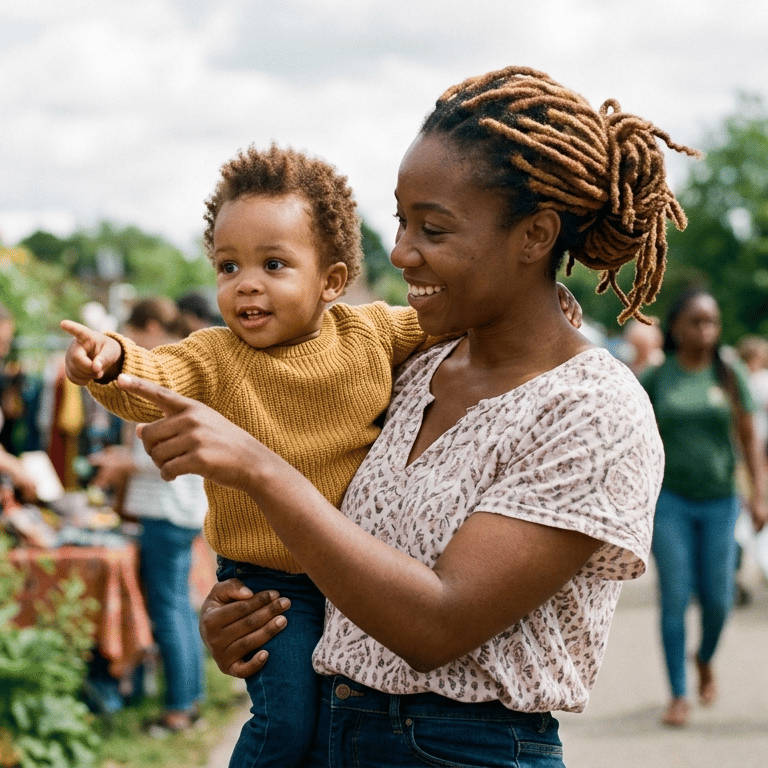
Image credit: AI. Mother and baby explore.
The Importance of Early Experiences
Some social factors and experiences can affect a child’s health and their ability to learn. In social-emotional development, the repetition and depth of experiences are key to a child’s ability to interpret what they hear, how they respond and their observations.
Areas of Development
Early childhood development can refer to many different aspects of development: physical, cognitive, emotional and social, etc. Some early developmental areas involve:
Memory
Attention
Cognition
Communication and language
Relationships
Sensory-motor skills
Mental health
Behavioural
Social-emotional.
These areas cannot be understood separately as they overlap; one influences the other. Therefore, it is important to consider the child holistically to provide the best start in life. The different aspects of child development and health work together to support a child’s overall well-being. [6][8]
Milestones
"One thing I wish I knew when starting my parenting journey was to only use “professional child developmental milestones guidelines ” as simply “a basic guideline” and nothing more. My reasoning for this is because I realised that children are all individuals and possess within them a much greater capacity to exceed, develop and to consume vast amounts of information far beyond the spheres the guidelines led me to believe were possible.
I have realised that children are highly porous, absorbent beings with a phenomenal capacity to thrive, grow and exceed way beyond the perceived notions that still exist regarding reaching specific developmental milestones. However, I now feel it is informationally restrictive and can lure parents into a somewhat deactivated approach rather than a plume and flurry of healthy energising engagement and continuous nurturing of one’s child’s “being and existence.” This is not to say that the developmental guidelines don’t serve a purpose; I feel they should be understood as minimal expectations.
I now believe that when presented with the right environmental stimulus, the right stimulative interactions and interventions that ignite and activate a child’s physical, intellectual, emotional, and social realms of their development, the term “exception to the rule or gifted” would no longer be used to describe a small minority of children. In my opinion, it would be standardised for the majority. " Wendy Forbes (NNEB Old Collegians)
Milestones should be approached as a guide. Each child is unique and develops at their own pace. Milestones are useful to have a rough idea of child development, although development tends to be a predictable pattern generally. Remember, each child also has a unique past and story, which includes their experiences and the opportunities they have had. It is common that children will reach an area quicker than another child. Numerous factors, such as a low birth weight, a big change or family stress, can affect child development. [2][3][4][6]
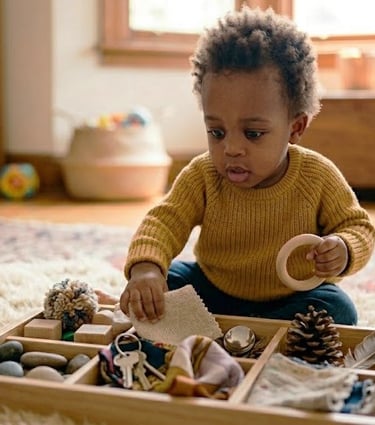
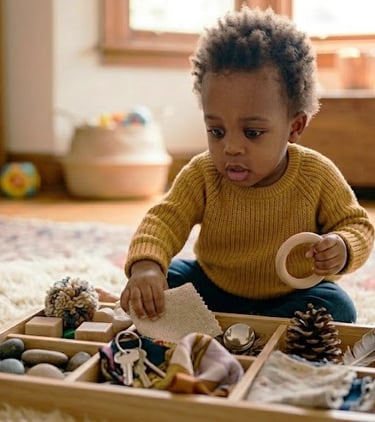
Image credit: AI. Baby explores items in a tray.
Influences on Early Development
As mentioned above, a child’s development and learning are complex and intertwined, and this begins at conception. Socioeconomic circumstances can also determine health and have an impact on early childhood development. There is the concept of ‘nature vs. nurture,’ which refers to the biological and environmental factors that determine how a child develops. Every child has a biological base, but develops in a social setting.
Providing children with security, safety, and a happy childhood is very important. The child’s environment can determine how they learn, their mental well-being, and their health. Relationships are key to children's development and well-being. Early development is significantly influenced by the nurture they receive in their environment from parents, caregivers, family and community. A sense of belonging and a place in community provide a foundation for a child’s developing identity and can enhance learning. [1][2][6][8]
Summary
From conception to preschool, a child’s experiences and interactions have a huge impact on their development. Early childhood experiences and development affect the child’s future. [1][2][6][7][9]
Read more about supporting child development here:
Author: Samantha Donnelly BA (Hons) MA and Wendy Forbes NNEB (OC)
Samantha Donnelly is an Early Childhood Practitioner with more than 15 years of experience working with children, specialising in Early Childhood Education. Samantha is the founder of SEED Early Childhood Educational Blog.
Wendy Forbes is NNEB qualified.
SEED Early Childhood is an independent educational blog created with this mission: to provide free, professional insights into child development and education for parents.




References
1 Likhar, A., Baghel, P., and Patil, M. (2022) Early Childhood Development and Social Determinants. Cureus, 14(9), e29500. https://doi.org/10.7759/cureus.29500
2 Early Education Child development Birth To 5 Matters https://birthto5matters.org.uk/child-development/
3 Cambridgeshire Community Services NHS Trust (2026) Child developmental milestones https://cambspborochildrenshealth.nhs.uk/child-development-and-growing-up/milestones/
4 Cambridgeshire Community Services NHS Trust (2026) Child Development and Growing Up
https://www.bedslutonchildrenshealth.nhs.uk/child-development-and-growing-up/
5 London Borough of Waltham Forest (2025) Your child's learning and development
https://www.walthamforest.gov.uk/yourchildsdevelopment
6 NSPCC Learning Child health and development https://learning.nspcc.org.uk/child-health-development
7 UNICEF Parenting Child development https://www.unicef.org/parenting/child-development - milestones
8 Department for Education (2026) EYFS statutory framework for group and school-based providers https://assets.publishing.service.gov.uk/media/68c024cb8c6d992f23edd79c/Early_years_foundation_stage_statutory_framework_-_for_group_and_school-based_providers.pdf.pdf
9 Department for Education (2023) Development Matters Non-statutory curriculum guidance for the early years foundation stage https://assets.publishing.service.gov.uk/media/64e6002a20ae890014f26cbc/DfE_Development_Matters_Report_Sep2023.pdf

SEED Early Childhood is the Educational blog founded by Samantha Donnelly to bring professionals information to you.
Share this post
Support SEED Early Childhood
Donate
SEED Early Childhood is donation-funded.
Thank you
Keep reading
Learn more about Autism, Early Development and Early Education
SEED Early Childhood Educational Blog
© 2026 SEED Early Childhood. All rights reserved. SEED Early Childhood is an Education Blog. Your use of this site is governed by our Terms and Conditions and Privacy Policy. Our website, blog services, content, and products are for informational purposes only. SEED Early Childhood does not provide medical advice, diagnosis, or treatment. See additional information.
Stay updated, subscribe to the newsletter.
SEED Early Childhood Guest Contributors
Educational Topics
Social Channels
Follow SEED Early Childhood on Social Media